

A georgette saree guide is, in a way, a guide to the saree that contemporary urban India actually wears. While cotton holds the everyday and Banarasi holds the wedding, georgette holds the wide middle ground — the sangeet evening, the office party, the sophisticated dinner, the Bollywood-influenced occasion. Georgette is the fabric that drapes most fluidly, photographs most beautifully, and travels best through long evenings. This georgette saree guide covers what makes the fabric distinctive, how to tell pure silk georgette from synthetic faux-georgette, how to drape and care for it, and how to choose your first georgette saree for European wear. Written from Munich, for European readers.
In this georgette saree guide
What makes a georgette saree different
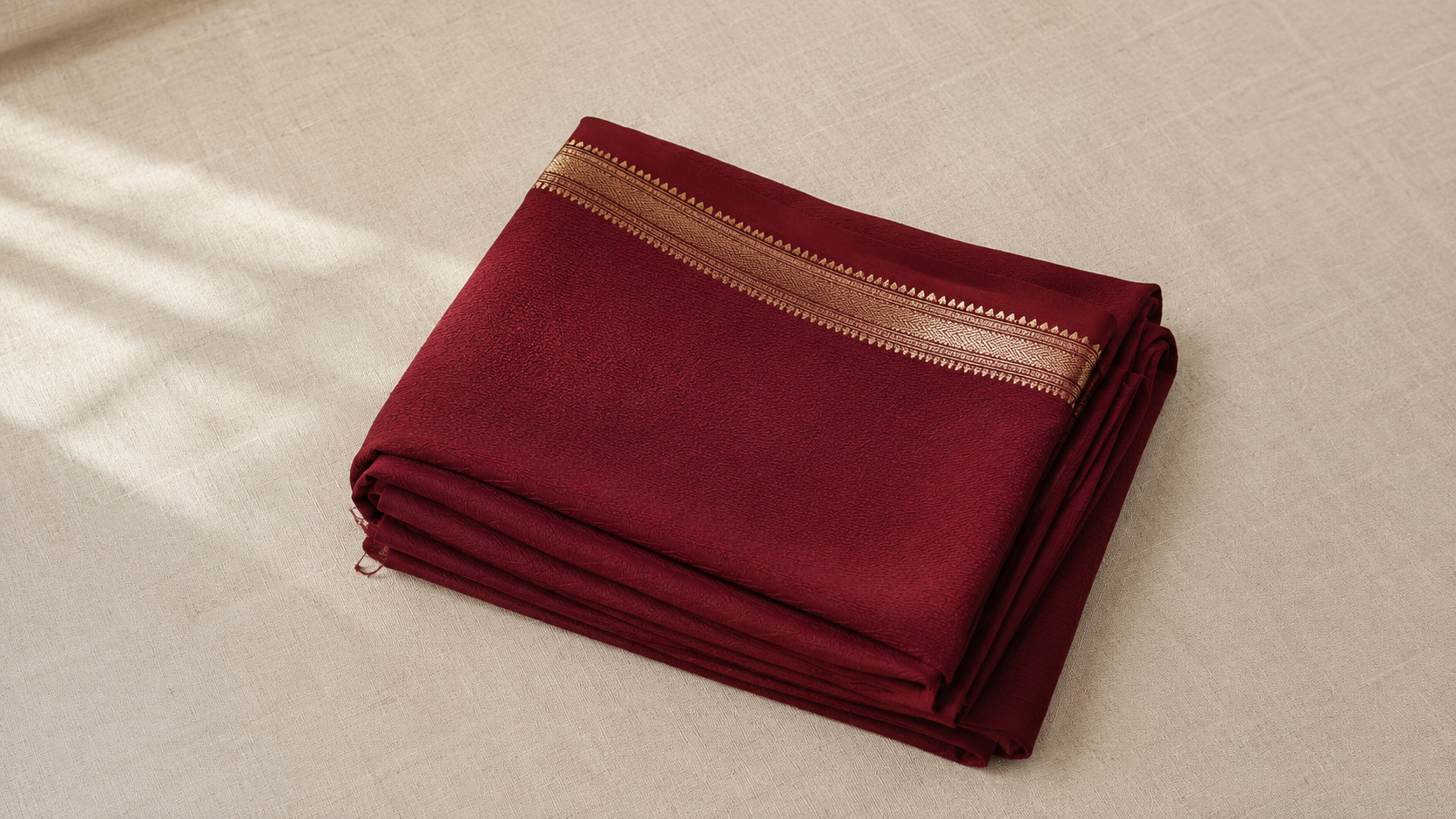
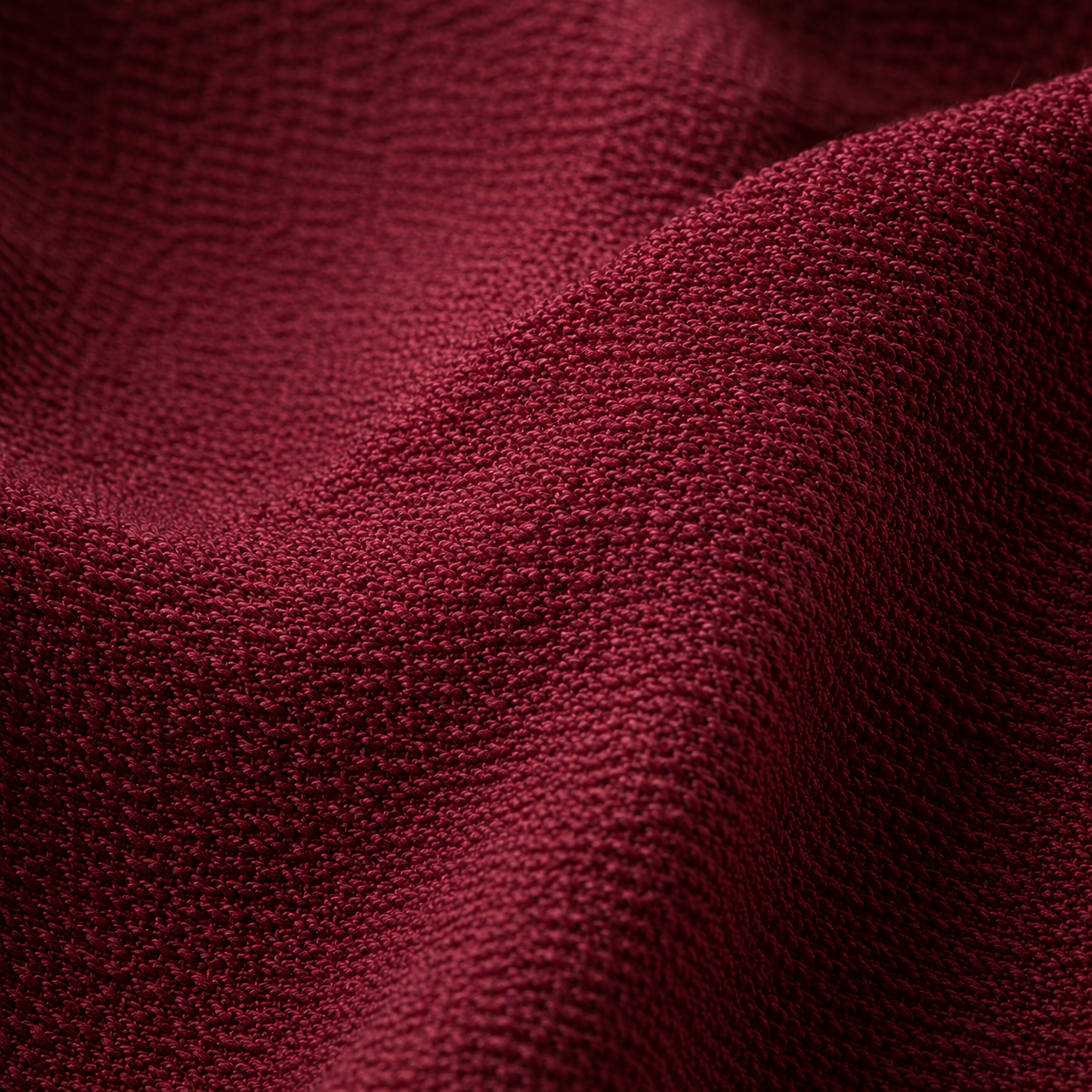
This georgette saree guide begins with the fabric itself. Georgette is a lightweight, sheer, finely woven fabric originally made from silk, with a distinctive crepe-like texture and a fluid, body-skimming drape. The defining technical feature is the use of highly twisted yarns — both warp and weft — which give the fabric its characteristic bounce, slight pebble texture, and signature movement when worn. A georgette saree is unmistakable to the touch: light but textured, sheer but not transparent, fluid but not slippery.
Georgette differs from cotton in almost every way. Where cotton is stiff and holds pleats by friction, georgette is fluid and flows with the body. Where cotton absorbs and breathes, georgette skims the skin and creates movement. Where cotton looks best at rest, georgette photographs beautifully in motion — which is why this georgette saree guide returns repeatedly to how the fabric moves, not just how it sits. A georgette saree guide that ignored the movement question would miss what makes the fabric distinctive.
The other defining characteristic of any georgette saree guide is the synthetic question. Pure silk georgette is a natural fibre fabric, expensive and increasingly rare. Faux-georgette — made from polyester, viscose, or other synthetic fibres — accounts for the majority of “georgette” sarees sold in India and abroad. The two are very different fabrics in feel, longevity, and price, and any honest georgette saree guide must walk through how to tell them apart.
A short history of georgette
Georgette is one of the few major saree fabrics with a precisely datable European origin. Any honest georgette saree guide notes this colonial-era footnote: the fabric was developed in France in the early 20th century by Madame Georgette de la Plante, a Parisian dressmaker who specialised in fine, draping fabrics for evening wear. The original georgette crepe was made from pure silk with high-twist yarns that produced its distinctive crinkled texture. Within a decade of its invention, georgette had spread across European fashion houses and become a signature evening fabric.
Georgette entered the Indian saree wardrobe much later — in the post-independence period from the 1950s onward, gaining ground through the 1970s and exploding in popularity with the rise of synthetic fibre production in India in the 1980s. By the 1990s, georgette had become the dominant Bollywood saree fabric, worn by leading actresses in film after film through the decade. The contemporary association between georgette and Indian evening wear was largely shaped during this era. A complete georgette saree guide must acknowledge this Bollywood-driven cultural arc — it is why georgette reads “contemporary glamorous” rather than “traditional heritage” to most Indian wearers today.
According to Vogue India, georgette has remained one of the most consistently popular saree fabrics in the contemporary Indian wardrobe — particularly for evening and sangeet wear. The fabric’s adoption is more recent than cotton or silk, but its presence in modern Indian dressing is now central. This georgette saree guide sits within that contemporary moment.
Pure silk georgette vs faux georgette — the two main types
The most practically important section of any georgette saree guide is the distinction between pure silk georgette and faux-georgette. The two fabrics look superficially similar in a photograph or under poor lighting, but behave very differently in wear and over time.
Pure silk georgette is made from natural silk yarn with the characteristic high-twist construction. The fabric has a subtle, alive sheen that catches light unevenly — sometimes called the “silk glow.” It feels cool and dry to the touch, drapes with weight even though the fabric is light, and ages beautifully. Pure silk georgette is breathable, biodegradable, and increasingly rare outside premium designer collections. In this georgette saree guide we treat pure silk as the gold standard. A pure silk georgette saree typically costs between 400 and 1,500 euros at source in India.
Faux-georgette is made from polyester, viscose, nylon, or blends. Modern faux-georgette is technically impressive — it mimics the high-twist texture and crepe-like surface of silk georgette convincingly. But the differences become apparent in use. Faux-georgette has a flatter, more uniform sheen — sometimes plastic-looking under direct light. It is warmer against the skin (does not breathe). It can develop static. It does not age gracefully — it pills, fades, and loses its drape over a few years. A faux-georgette saree typically costs between 40 and 250 euros. This georgette saree guide does not dismiss faux-georgette outright — it has its place — but the difference in longevity matters.
How to tell them apart. Three practical tests in any georgette saree guide. First, the burn test (only on a small thread snip): silk burns slowly and smells like burnt hair; polyester melts and smells chemical. Second, the touch test: silk feels cool and dry; faux-georgette often feels slightly warm or “smooth-plastic.” Third, the price test: anything sold cheaply as “georgette” is almost certainly faux-georgette, regardless of the label. This georgette saree guide takes the position that both fabrics have legitimate places in a wardrobe — but you should know which one you are buying. The fibre-content question is the most important section of this georgette saree guide.
How a georgette saree drapes
The defining feature of georgette is its drape. A georgette saree falls in soft, sweeping folds rather than crisp pleats. The pallu, especially, hangs in a fluid column rather than the more structured form a silk saree pallu takes. When the wearer moves, georgette moves with her — the fabric flows around the body, catches air, and creates the sense of motion that has made it the favourite saree fabric for Bollywood dance sequences and editorial photography. This georgette saree guide treats drape as the central question.
For practical wearing, this fluid drape has real consequences. Georgette pleats are softer than cotton or silk pleats — they need to be pinned more carefully to hold their column. The pallu hangs longer than expected because the fabric stretches slightly under its own weight. The drape feels lighter than silk while still creating the visual weight of a formal saree. Our step-by-step Nivi drape guide works for georgette with one adjustment: use two safety pins instead of one, because the fluid fabric slips more than cotton. The drape advice in this georgette saree guide assumes you have at least practiced on cotton first.
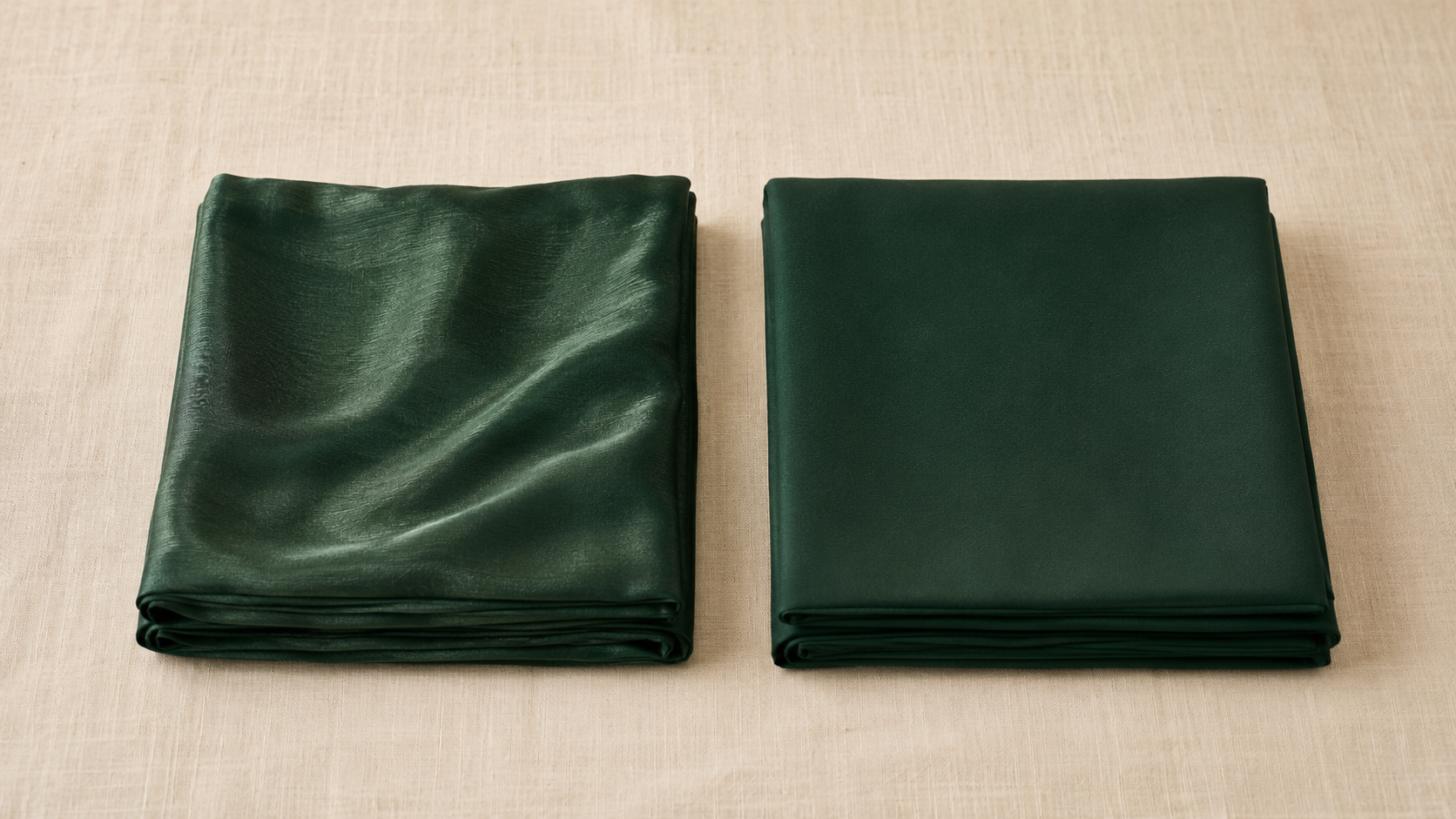
For European wearers learning to drape, this georgette saree guide recommends starting with cotton (per the cotton saree guide) before attempting georgette. The fluid drape of georgette is harder to master than the friction-held drape of cotton. Once you can drape cotton confidently, the same Nivi technique adapts to georgette with the extra-pin precaution.
When designers use georgette — and why
Any contemporary georgette saree guide must address why designers love this fabric. Georgette is the favourite evening-wear fabric of Indian designers including Sabyasachi, Manish Malhotra, Anita Dongre, Tarun Tahiliani, and others who have built signature evening-wear collections around the fabric. The reasons are technical and aesthetic.
Technically, georgette is the easiest premium fabric to work with at scale. It holds dye beautifully — including saturated jewel tones like emerald, royal blue, deep wine, and ruby red that look stunning against Indian skin tones. It accepts embellishment (sequins, beadwork, embroidery, gota patti) without becoming heavy or losing its drape. It cuts and stitches cleanly. And it photographs spectacularly under both flash and natural light, which makes it the obvious choice for photographed events. This georgette saree guide treats the designer-fabric overlap as central to understanding why georgette commands the contemporary evening market.
Aesthetically, georgette reads contemporary without being trendy. A georgette saree in a saturated jewel tone, with subtle embellishment at the pallu, is the modern Indian evening look — neither too traditional nor too fashion-forward. The reader of this georgette saree guide who attends an Indian wedding sangeet, a Diwali celebration, or a formal dinner in Europe will almost certainly be wearing a georgette saree or be surrounded by them. The cultural reach of the fabric is, in part, why this georgette saree guide exists.
Georgette saree care — fluid fabric, careful washing
Georgette care is more demanding than cotton care, and any complete georgette saree guide must walk through the specifics. The fluid construction that gives georgette its beauty is also what makes it vulnerable — to snagging, stretching, water damage, and rough handling.
Washing. Pure silk georgette should be dry-cleaned, full stop. Home washing risks both shrinkage and loss of the high-twist crinkle. Faux-georgette can be hand-washed in cold water with a gentle detergent, but never wrung. Squeeze water out by pressing gently between flat hands. Never machine-wash any georgette saree — the spin cycle alone can stretch the fabric beyond repair. This georgette saree guide insists on the no-machine-wash rule for both pure silk and faux variants.
Drying. Lay flat on a clean towel and roll gently to absorb water. Hang to air-dry in the shade, away from direct sunlight, which fades the saturated dyes that make georgette so distinctive. Never wring, never twist, never tumble-dry.
Ironing. Iron georgette on the reverse side, with low heat and a pressing cloth between the iron and the fabric. The high-twist yarns can flatten if ironed hot, losing the crinkle texture that defines the fabric. Many wearers prefer to steam rather than iron. The ironing rule in this georgette saree guide: never high heat, never direct contact, never on the right side of the fabric.
Storage. Hang georgette sarees on padded hangers rather than folding — repeated folding creates permanent crease lines. For a saree wardrobe drawer with limited hanging space, fold loosely with tissue paper between the folds. The storage advice in this georgette saree guide differs from cotton; the friction-resistant nature of cotton tolerates folding while georgette does not. The storage rule in any georgette saree guide is: hang first, fold only if you must.
Snag risk. The single most common georgette damage is snagging on jewellery, watch buckles, or rough surfaces. Wear minimal jewellery near the edges of the saree, avoid bracelets with hooks, and check the back of your blouse closure for snag-prone hardware. A snagged thread on georgette is hard to repair invisibly. The snag-awareness habit this georgette saree guide recommends becomes second nature with practice.
Georgette for European weather
This georgette saree guide must address the climate question for European wearers. Georgette is more adaptable to European weather than its lightness suggests, but with caveats that any practical georgette saree guide must walk through.
For spring, summer, and early autumn in Europe, georgette is one of the best saree fabrics available. The fluid drape works beautifully in warm-but-mild conditions — the fabric does not stick to skin in the way that heavier synthetics do, and the lightness keeps you comfortable through long events. For office occasions, daytime weddings, and evening parties from April to September, georgette is the right answer for many European saree wearers. The seasonal logic in this georgette saree guide is straightforward: April-September is georgette’s natural window.
For autumn and winter, georgette needs more layering than cotton or silk. The fabric itself is light and does not retain body heat. The layering approach we cover in our winter saree guide works for georgette: thermal long-sleeved base under the blouse, thermal leggings under the petticoat, and a pashmina or wool shawl over the shoulders. With this layering, a georgette saree can carry through a European December reception. Without it, the fabric feels insubstantial in cold rooms. This georgette saree guide is firm on the layering point — georgette without thermals in European winter is uncomfortable.
For the wedding-occasion use case specifically, our wedding saree Europe guide places georgette as one of the most appropriate fabrics for sangeet evenings, evening receptions, and any occasion where designer-aesthetic dressing is welcomed. The drape and the photographable nature of georgette make it ideal for events where photos matter.
How to choose your first georgette saree
The practical section of this georgette saree guide is now. For a European wearer choosing a first georgette, four decisions matter most, and any useful georgette saree guide must walk through each.
Choose pure silk georgette if budget allows, faux-georgette if not. The price differential is real (400+ euros for pure silk vs 40-250 for faux). For a first georgette saree where you will learn the fabric, a mid-tier faux-georgette (around 120-200 euros, from a reputable retailer with verified fibre content) is a reasonable starting point. Once you know you wear georgette regularly, upgrade to pure silk for the next purchase. This georgette saree guide does not insist on pure silk — the fabric experience translates between the two for learning purposes. A practical georgette saree guide must accept budget realities.
Choose a saturated jewel tone for your first piece. Georgette comes alive in deep colours. Emerald green, royal blue, ruby red, wine, deep teal, plum, or saturated mustard work beautifully. Avoid pastels for your first georgette — pastel georgette can read insubstantial against the fabric’s natural fluidity. Save pastels for a second purchase once you know how you wear the fabric. The colour guidance in this georgette saree guide leans toward saturated jewels for first-time buyers.
Choose moderate embellishment. The georgette market spans from completely plain to heavily sequinned. For a first georgette saree, look for a piece with embellishment concentrated at the pallu and a clean body — this maximises versatility (the body works for office occasions, the pallu reads dressy for evenings). Avoid all-over heavy embellishment for a first piece; the saree becomes too occasion-specific. This is the embellishment principle this georgette saree guide returns to repeatedly.
Choose a fitted, well-constructed blouse. Georgette demands a well-fitted blouse more than cotton does, because the fluid drape exposes any blouse fit issues. Our saree blouse design guide covers the full decision framework. For georgette specifically, a brocade, silk, or velvet blouse pairs better than a cotton blouse — the weight balance reads more intentional. The blouse pairing in this georgette saree guide leans dressy.
Frequently asked questions
Is a georgette saree appropriate for office wear?
For corporate offices, a plain or lightly embellished georgette saree in a muted colour works well. Avoid heavy sequin or beadwork for daytime office occasions — save those for evening events. A solid deep-coloured georgette with a clean border reads professional and contemporary. The office-georgette recommendation in this georgette saree guide is to keep the embellishment minimal.
How much should I pay for a pure silk georgette saree?
A genuine pure silk georgette from a reputable Indian source costs between 400 and 1,500 euros, depending on weight, weave quality, and embellishment. Faux-georgette typically costs 40-250 euros. Add 30-50 percent for international shipping. Anything sold as “pure silk georgette” for under 200 euros is almost certainly faux — the silk-thread cost alone exceeds that price point.
Can I tell pure silk georgette from synthetic by touch?
With practice, yes. Pure silk georgette feels cool and dry — it has a slight “give” to the touch and a subtle uneven sheen. Faux-georgette feels warmer, smoother, and has a more uniform plasticky sheen. The clearest test is the burn test on a tiny thread snip, but most wearers learn to recognise the difference by feel within a few sarees. This georgette saree guide recommends asking the retailer for the fibre content certificate before any significant purchase.
Why does my georgette saree snag?
The high-twist construction that gives georgette its fluid drape also makes it vulnerable to snagging. Any rough surface or sharp edge — jewellery hooks, watch buckles, the underside of a chair, even fingernails — can catch a thread and pull it. Once a thread pulls, the repair is difficult. The georgette saree guide rule is to handle the fabric with awareness and check your accessories before draping. Any honest georgette saree guide acknowledges that snag risk is part of owning this fabric.
Does georgette wrinkle a lot?
Georgette wrinkles less than cotton but more than heavy silk. The high-twist construction tends to bounce back from light creasing, but deep folds set in if the saree is left folded. Hang georgette sarees rather than folding when possible. For travel, roll loosely with tissue paper to minimise crease lines, then hang for an hour at the destination to release any travel wrinkles. The travel-georgette tip in this georgette saree guide is to roll, never fold.
What blouse works best with a georgette saree?
A fitted brocade, silk, or velvet blouse pairs best with georgette. The weight balance reads intentional — a heavy structured blouse anchors the fluid saree drape. Avoid loose-fitting blouses; georgette exposes fit issues quickly. Our saree blouse design guide covers the complete framework and pairs with this georgette saree guide naturally. According to the Victoria and Albert Museum’s South Asia collection, the silk-blouse-with-fluid-saree pairing has dominated formal Indian evening wear since the mid-20th century.
One more thing
A georgette saree is the saree that introduces movement into a wardrobe. Cotton sits; silk announces; georgette flows. For a European wearer who has built confidence with cotton (Piece 1 of our five-piece capsule) and is ready for the dressier middle of the range, this georgette saree guide proposes georgette as the natural next acquisition. The fabric carries you through sangeet evenings, office parties, formal dinners, daytime weddings, and most of the occasions that fall between cotton-everyday and silk-formal. Read alongside our other fabric guides, this georgette saree guide closes the practical-to-fluid spectrum in a developing saree wardrobe.
The other guides in our library support the georgette journey. Our cotton saree guide covers the foundational fabric; our silk comparison covers the formal silks; our blouse guide handles the structural pairing; our wedding-occasion guide places georgette in the broader wedding wardrobe; our draping tutorial teaches the technique with the extra-pin adjustment. Read alongside this georgette saree guide, they form the complete reading path for a European wearer adding georgette to a developing saree wardrobe.
Follow the journey
Be there from day one.
IndiaNiva is launching its online shop soon. Until then we are sourcing pure silk georgette from Indian designer workshops, researching tailors in Europe, and writing guides like this one. Two thoughtful emails a month. Nothing more.
Continue reading
- Cotton saree guide — the foundational fabric to learn first
- Your first saree wardrobe — where georgette sits in your starter five
- Saree blouse design — the right blouse for a georgette saree
- Wedding saree Europe — georgette at sangeets, receptions, and evening events
- How to drape a saree — the Nivi technique with the georgette adjustment
- How to wear a saree in winter — layering georgette through European cold
This georgette saree guide draws on conversations with European saree wearers in Germany and France, contemporary Indian designer collections, and the Victoria and Albert Museum’s South Asia collection for historical context on georgette’s adoption into Indian textile traditions. Where specific references appear, the source is linked. All information is correct at the time of writing.