
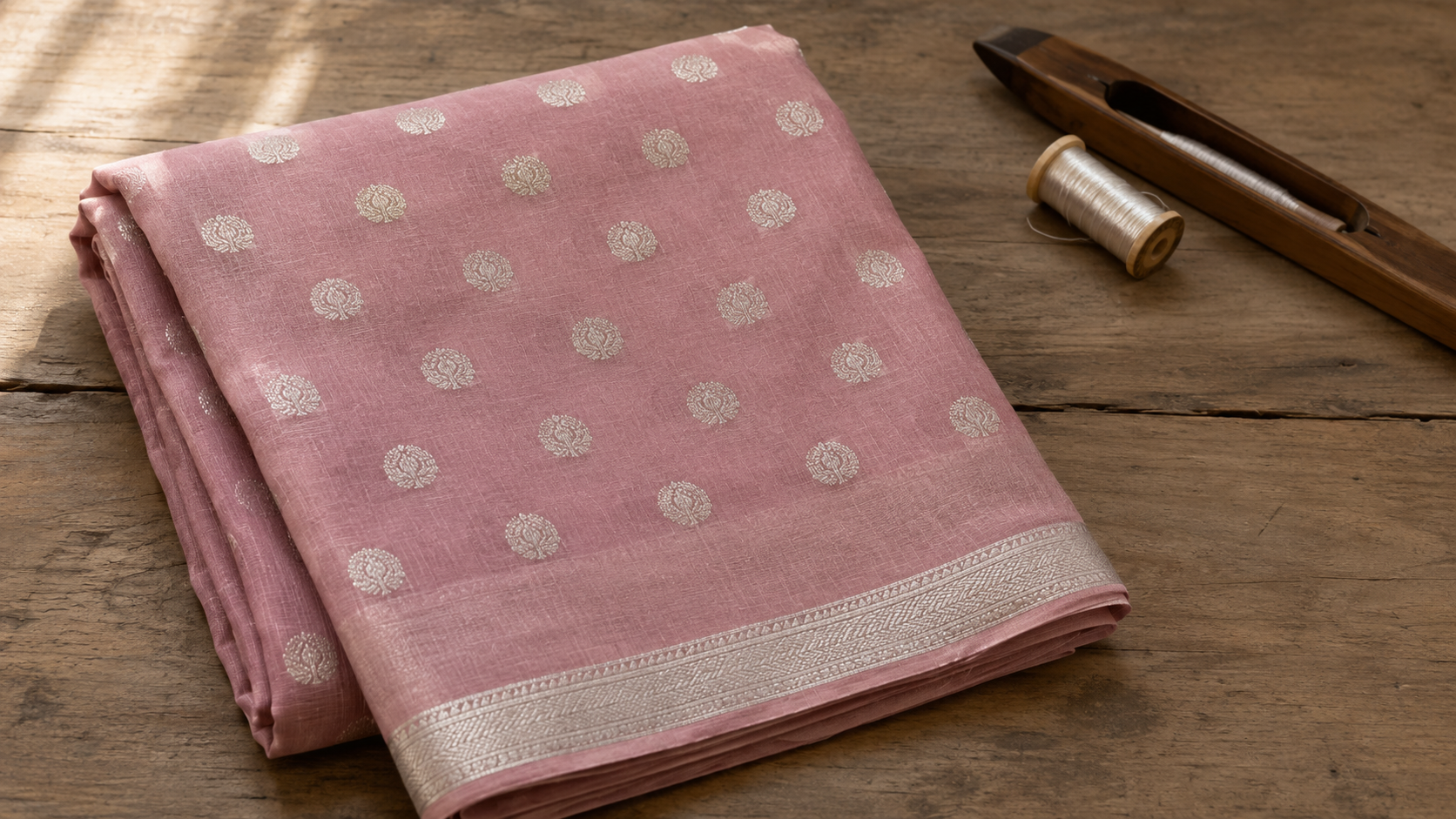
A chanderi saree guide is, properly told, a guide to one small town in Madhya Pradesh. Chanderi is unique among Indian saree traditions in being tied to a single place — the town of Chanderi, in the Ashoknagar district, where weavers have produced these distinctive silk-cotton sarees for more than 1,300 years. The fabric has a defining character: lightweight, slightly translucent, with a subtle sheen that catches light, woven with traditional motifs in gold or silver zari. This chanderi saree guide covers what makes the fabric distinctive, the three Chanderi types, the signature motifs, how to spot a genuine handloom from an imitation, and how to choose your first Chanderi saree for European wear. Written from Munich, for European readers.
In this chanderi saree guide
What makes a Chanderi saree different
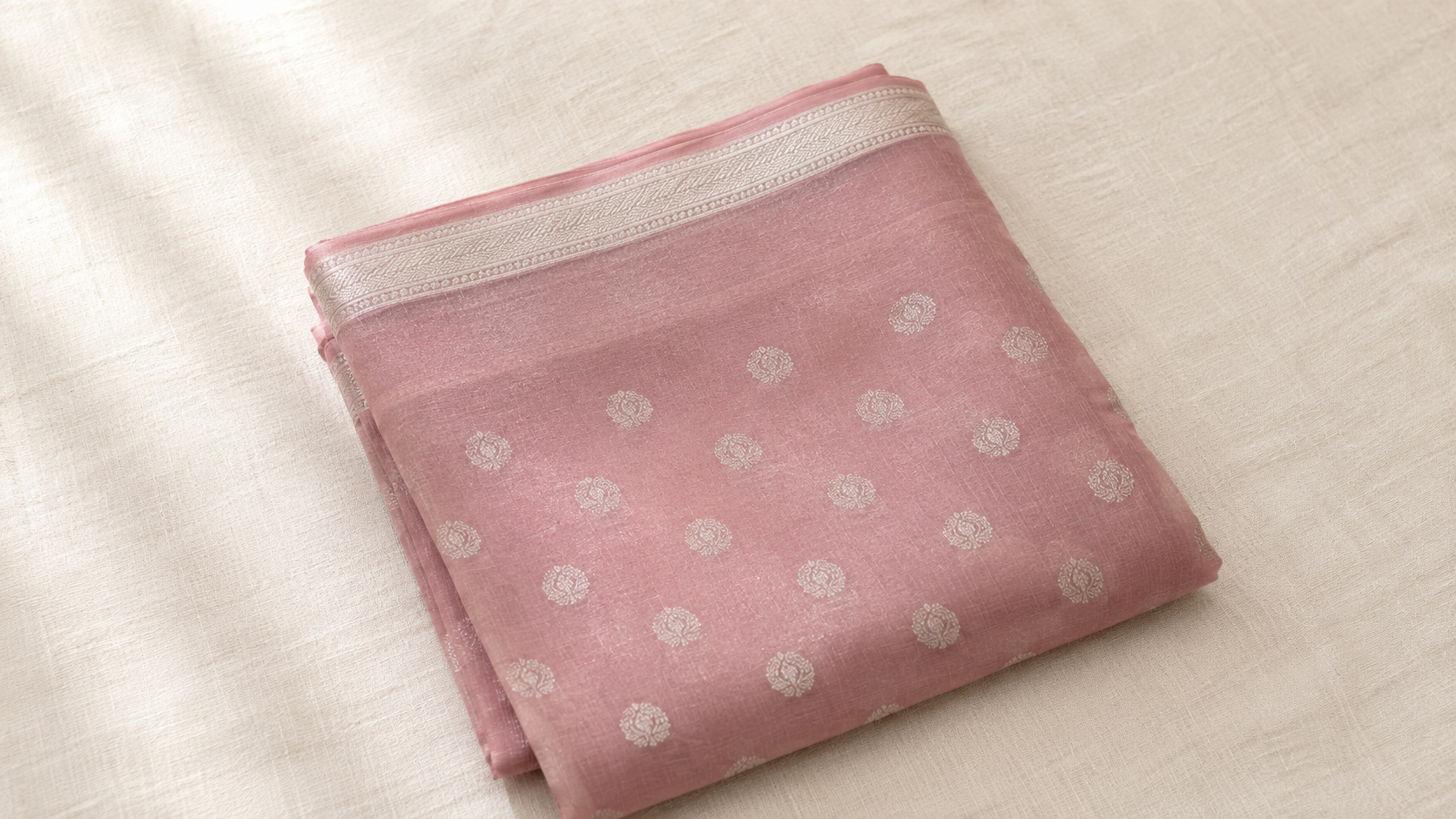
This chanderi saree guide begins with the fabric. A Chanderi is defined by its lightness — lighter than a Banarasi silk, lighter than a heavy cotton, with a slight translucency that catches light and a subtle sheen that distinguishes it from any pure cotton. The fabric is woven in three variants (pure silk, silk-cotton blend, pure cotton), but all three share the distinctive Chanderi character: light, slightly sheer, with intricate zari motifs woven into the body and pallu.
Chanderi differs from the other fabrics in our series in a fundamental way. Cotton has dozens of regional traditions across India. Georgette has no place — it was invented in France. Banarasi is from Varanasi, Kanjivaram from Kanchipuram, both heavy-silk traditions. Chanderi is unique in being a single-place, single-tradition fabric with a fully distinctive blend recipe. This chanderi saree guide treats place as central — the town of Chanderi, its weavers, its specific looms, its protected GI status. A serious chanderi saree guide cannot be written without grounding the fabric in its geography.
The other defining feature any chanderi saree guide must explain is the silk-cotton blend. Classic Chanderi uses silk in the warp (lengthwise threads) and cotton in the weft (crosswise threads), or sometimes the reverse. This blend gives Chanderi its signature combination of sheen and softness, drape and structure, formal-feeling weight at a fraction of the weight of pure silk. The blend is the technical secret of the tradition, and this chanderi saree guide returns to it throughout.
A short history of Chanderi
The town of Chanderi sits in the Bundelkhand region of Madhya Pradesh, between the Vindhya Range and the Betwa River. Weaving there is documented back to at least the 7th century CE. Chanderi sarees became famous during the medieval period as part of the Malwa court textiles, and grew under Mughal patronage from the 16th century onward. The thin silk-cotton fabric was prized at court for being light enough for the Indian summer heat while retaining the formality of zari embellishment.
The modern Chanderi tradition owes much to Maharani Vijaya Raje Scindia of Gwalior, who in the post-independence period invested in reviving the town’s weaving cooperatives. By the 1970s, Chanderi had re-established itself as a premium handloom destination. In 2005, Chanderi Sarees received GI tag protection from the Geographical Indication Registry of India, formally recognising the fabric as a protected regional tradition. Any complete chanderi saree guide must acknowledge this GI status — it is the strongest authenticity signal a buyer has. The 2005 GI tag is the single most important date in any chanderi saree guide.
According to Vogue India, Chanderi has seen sustained popularity through contemporary Indian fashion — designers from Sabyasachi to Ritu Kumar have built collections around the fabric, and younger Indian women have rediscovered Chanderi as a daytime-occasion alternative to heavier silks. This chanderi saree guide sits within that contemporary revival.
The three types of Chanderi
Any thorough chanderi saree guide must distinguish the three Chanderi variants. The three differ in fibre content, drape, sheen, and occasion suitability — and the difference matters when buying. This chanderi saree guide places the three-type distinction as the most important practical decision a buyer makes.
Pure silk Chanderi (Chanderi silk)
The dressiest variant — woven entirely from silk in both warp and weft. Pure silk Chanderi has the highest sheen, the smoothest drape, and the most formal appearance. It costs the most (typically 400-1,200 euros at source) and is the right choice for daytime weddings, formal occasions, and festival evenings. The fabric reads luxurious without being heavy. In this chanderi saree guide we treat pure silk Chanderi as the upgrade purchase rather than the first-time buy.
Silk-cotton Chanderi (the classic blend)
The most traditional and most common variant — silk in the warp, cotton in the weft (or the reverse, depending on the weaver). The blend gives the characteristic Chanderi combination of subtle sheen, light weight, and slight translucency. Silk-cotton Chanderi sits between everyday and formal — it works for office occasions, daytime weddings, festival celebrations, and dressy daytime events. Prices typically range 200-600 euros at source. This chanderi saree guide treats silk-cotton as the most versatile of the three. Most readers of this chanderi saree guide will end up with a silk-cotton as their first Chanderi.
Pure cotton Chanderi
The everyday variant — woven entirely from fine cotton, with the characteristic Chanderi motifs and lightness preserved. Pure cotton Chanderi has no sheen but retains the distinctive translucency and elegant motif work. It is the most affordable variant (typically 100-300 euros at source) and works beautifully for warm-weather wear, office occasions, and casual festival days. Some traditionalists argue pure cotton Chanderi is not “real” Chanderi; this chanderi saree guide takes the broader view that all three variants belong to the tradition.
The signature Chanderi motifs
Beyond fabric, Chanderi is recognisable by its motifs. The traditional Chanderi design vocabulary is distinctive enough that an experienced eye can identify a Chanderi from across a room. Any chanderi saree guide must cover the signature motifs, because the motif vocabulary is part of what separates a real Chanderi from a generic light-silk imitation.
Buti or buta. Small woven motifs scattered across the body of the saree — typically gold or silver zari work, sometimes coloured silk thread. The buta motifs are placed in a regular pattern across the fabric, creating the characteristic Chanderi “scattered jewels” appearance. Common buta designs include the asharfi (gold coin), nalferma (jasmine flower), dandidar (geometric), and chand-tara (moon and star). The buta vocabulary is, in this chanderi saree guide, the single most distinctive design feature of the tradition.
Pallu motifs. The pallu of a Chanderi saree is typically more heavily decorated than the body — with concentrated zari work, often featuring traditional motifs like the peacock, lotus, mango (paisley), or geometric patterns. The pallu carries the visual weight of the saree’s design, which is why this chanderi saree guide considers pallu inspection essential before any purchase.
Border styles. Chanderi borders are typically narrow to medium-width, woven directly into the fabric (not separately attached), with zari thread creating a contrasting band along the lower edge. Traditional border patterns include stripes, geometric repeats, and floral vines. The border check in this chanderi saree guide is the second-most-important authentication test after the GI mark.
How a Chanderi saree drapes
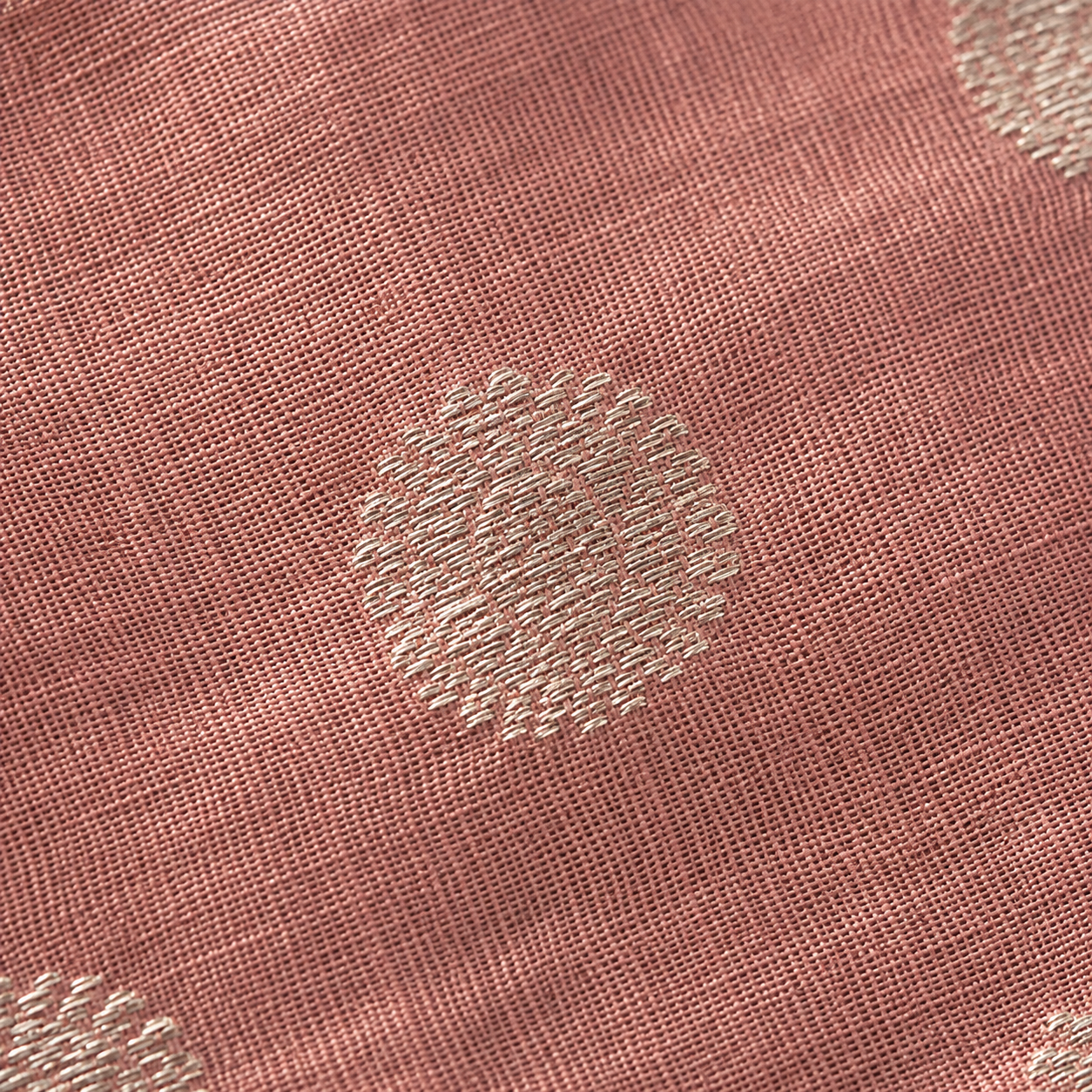
A Chanderi saree drapes differently from cotton and georgette, and any practical chanderi saree guide must walk through the drape character. Chanderi sits between the structured drape of cotton and the fluid drape of georgette. The fabric is light enough to flow with the body but stiff enough to hold pleats cleanly. The silk content gives the fabric a slight sheen that catches light at the pleats; the cotton content keeps the fabric from being slippery against the petticoat. This drape balance is, in this chanderi saree guide, the central technical reason the fabric is so well-loved.
For first-time wearers, this chanderi saree guide considers Chanderi one of the easiest dressy fabrics to drape. The structure holds pleats without needing extensive pinning. The lightness avoids the heat-trap problem of heavy silk. The translucency adds visual interest without revealing too much. Our step-by-step Nivi drape guide works for Chanderi as written; one safety pin at the shoulder is usually sufficient, where georgette needs two. The drape ease in this chanderi saree guide is the friendliest of any dressy fabric we cover.
The pallu of a Chanderi saree hangs beautifully because of the silk content. The slight weight of the zari motifs gives the pallu a clean fall, neither too stiff nor too fluid. This is part of what makes Chanderi photograph well at events — the pallu drape reads as deliberate and elegant rather than improvised.
Chanderi saree care
Chanderi care is more demanding than pure cotton care but less demanding than pure silk. Any complete chanderi saree guide must walk through the routines. The silk-cotton blend, the zari motifs, and the translucent weave all require specific attention. The care section of this chanderi saree guide is one of the most consulted by new owners.
Washing. Pure silk Chanderi should be dry-cleaned, full stop. Silk-cotton and pure cotton Chanderi can be hand-washed in cold water with a gentle detergent, but never wrung. Squeeze water out by pressing gently between flat hands. Never machine-wash any Chanderi — the agitation can break the fine threads and damage the zari motifs.
Drying. Lay flat on a clean towel and roll gently to absorb water. Hang to air-dry in the shade, away from direct sunlight, which fades natural dyes and tarnishes real silver zari. Never wring, never twist.
Ironing. Iron Chanderi on the reverse side, with low heat and a pressing cloth between the iron and the fabric. Direct heat damages zari motifs and can scorch the silk warp threads. Many experienced wearers prefer to steam rather than iron, particularly for Chanderi with heavy zari work.
Storage. Fold loosely with acid-free tissue paper between the folds. Refold every two months to prevent permanent crease lines. Real silver zari can tarnish in damp storage; a small sachet of cedar or neem in the storage area helps. Avoid plastic storage bags — they trap moisture and accelerate tarnishing. The storage approach this chanderi saree guide recommends is conservative: better to over-protect a Chanderi than to discover tarnished zari before a wedding.
Chanderi for European weather
This chanderi saree guide must address the climate question. Chanderi is one of the most adaptable saree fabrics for European weather — the silk-cotton blend bridges seasons in a way pure cotton and pure silk cannot. The climate verdict in this chanderi saree guide is positive: Chanderi works in more European weeks of the year than almost any other saree fabric.
For spring, summer, and early autumn in Europe, Chanderi is ideal. The lightness keeps you comfortable through long warm-weather events. The translucency catches light beautifully in outdoor garden settings. The sheen reads dressy without being heavy. For daytime weddings, festival celebrations, and office occasions from April to September, Chanderi works almost anywhere. The seasonal logic in this chanderi saree guide places April-September as the natural Chanderi window.
For autumn and winter, Chanderi needs some layering. The fabric is light and does not retain body heat the way heavy silk does. The layering approach we cover in our winter saree guide works for Chanderi: thermal long-sleeved base under the blouse, thermal leggings under the petticoat, and a pashmina or wool shawl over the shoulders. With layering, Chanderi extends into European autumn and mild winter — though it never carries the warmth of a tussar or wool saree.
For European wearers building a saree wardrobe, Chanderi is the Piece 3 of our five-piece capsule — the day-to-evening fabric that fills the gap between cotton-everyday and silk-formal. The versatility makes Chanderi one of the most-worn pieces in a developing wardrobe. The Piece 3 placement is, throughout this chanderi saree guide, the most useful framing for first-time wearers.
How to choose your first Chanderi saree
The practical section of this chanderi saree guide is now. For a European wearer choosing a first Chanderi, four decisions matter most, and any useful chanderi saree guide must walk through each one.
Choose silk-cotton over pure silk or pure cotton for your first piece. The silk-cotton blend is the most versatile of the three Chanderi variants — it works across more occasions, costs less than pure silk, and reads dressier than pure cotton. Once you know you wear Chanderi often, the next acquisition can be pure silk for formal occasions. This is the first-purchase recommendation in this chanderi saree guide for European wearers.
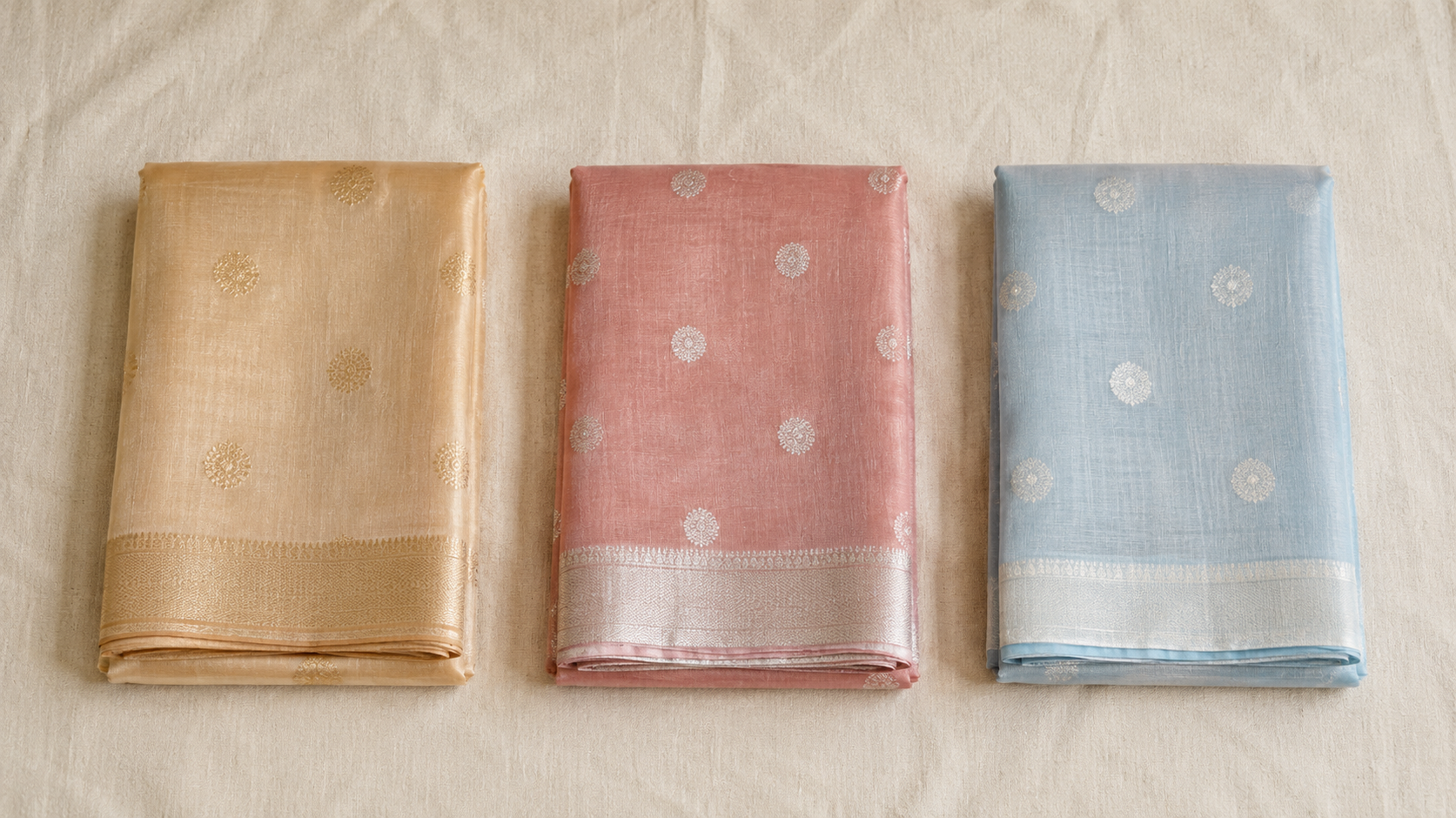
Choose a soft, light colour. Chanderi comes alive in pastels and soft mid-tones — dusty pink, pista green, powder blue, pale gold, soft lavender, cream-and-gold, peach. The translucency and zari motifs read beautifully in light colours. Avoid very dark colours for a first Chanderi — black or deep navy can read flat against the fabric’s natural lightness, though they work for second purchases once you know the fabric. The colour guidance in this chanderi saree guide leans firmly toward pastels for first-time buyers.
Choose moderate motif density. Chanderi sarees range from sparsely scattered buta motifs to heavily zari-covered all-over patterns. For a first Chanderi, a piece with moderate buta density on the body and concentrated zari on the pallu offers the best versatility — wearable for office, daytime weddings, and evening occasions alike. Heavy all-over zari is best for second or third Chanderis. The motif-density guidance this chanderi saree guide recommends is to start moderate and build from there.
Look for genuine handloom and GI mark. A genuine Chanderi from the protected GI tradition costs 200-600 euros for silk-cotton, 100-300 euros for pure cotton, 400-1,200 euros for pure silk. Anything dramatically cheaper is likely a power-loomed Chanderi-style fabric — visually similar but lacking the tradition and craftsmanship. Ask the retailer for GI documentation or the Handloom Mark before buying.
Frequently asked questions
Is a Chanderi saree appropriate for daytime weddings?
Yes — Chanderi is one of the most appropriate fabrics for daytime weddings, especially garden ceremonies, mehndi events, and morning sangeet celebrations. The lightness suits warm-weather daytime occasions; the zari motifs read dressy enough for formal contexts; the silk-cotton blend photographs beautifully under natural light. This chanderi saree guide places daytime weddings as the natural occasion for the fabric. Many readers of this chanderi saree guide will find their first wedding-saree decision lands here.
How much should I pay for a genuine Chanderi saree?
A genuine handloom Chanderi from the GI-protected tradition costs 200-600 euros for silk-cotton, 100-300 euros for pure cotton, and 400-1,200 euros for pure silk. Add 30-50 percent for international shipping to Europe. Anything sold as “Chanderi” for under 80 euros is almost certainly a power-loomed imitation. The pricing guidance in this chanderi saree guide reflects current source-market pricing from Chanderi town cooperatives.
How can I tell a real Chanderi from an imitation?
Three tests this chanderi saree guide recommends. First, look for the GI mark or Handloom Mark — genuine Chanderi from the protected tradition carries one or both. Second, check the fabric character — real Chanderi has visible translucency when held up to light, with a subtle uneven sheen from the silk content. Third, examine the motifs — handloom Chanderi has motifs woven directly into the fabric (visible on both sides), not embroidered on top. Imitations often have embroidered or printed motifs that look distinct only from one side.
Does Chanderi work in European winter?
With layering, yes. Pure cotton Chanderi struggles in cold weather without significant thermal layering. Silk-cotton Chanderi handles autumn and mild winter better, especially with a long-sleeved velvet blouse and a pashmina shawl. Pure silk Chanderi can extend further into cold weather. Our winter saree guide covers the layering specifics. The winter verdict in this chanderi saree guide is that Chanderi is never the right choice for the coldest European months (December-February) without serious adaptation.
What blouse works best with a Chanderi saree?
A silk or raw silk blouse pairs best with Chanderi. The weight balance is important — a heavy brocade blouse can overpower a light Chanderi; a thin cotton blouse can read under-weighted. A fitted three-quarter-sleeved silk blouse in a complementary or contrasting colour is the most reliable pairing. Our saree blouse design guide covers the full framework and pairs with this chanderi saree guide naturally. According to the Victoria and Albert Museum’s South Asia collection, the silk-blouse-with-Chanderi-saree pairing has been documented in court textiles since the Mughal period.
How is Chanderi different from Maheshwari?
Both are silk-cotton blend sarees from Madhya Pradesh, both lightweight, both with distinctive motifs. The differences: Maheshwari is from Maheshwar (a different town), uses different traditional motifs (typically more geometric stripe patterns), and has a slightly heavier weave. Chanderi is sheerer, with scattered buta motifs and finer zari work. Both are excellent — different traditions, both worth knowing. This chanderi saree guide focuses on Chanderi specifically, but the comparison is one any complete chanderi saree guide must acknowledge.
One more thing
A Chanderi saree is the dressy daytime fabric a European saree wardrobe most often needs. Cotton handles everyday; silk handles formal evening; Chanderi handles the wide and important middle — office occasions, daytime weddings, festival mornings, summer events. For a European wearer who has built confidence with cotton and is ready for the next acquisition, this chanderi saree guide proposes silk-cotton Chanderi as the natural next piece. The versatility, the lightness, and the GI-protected heritage make it one of the most rewarding sarees to own. The argument for Chanderi in this chanderi saree guide is simple: it solves more wardrobe problems per piece than almost any other fabric.
The other guides in our library support the Chanderi journey. Our cotton saree guide covers the foundational fabric; our georgette saree guide covers the fluid evening alternative; our silk comparison covers the heavy-silk traditions; our blouse guide handles the structural pairing; our five-piece capsule places Chanderi as Piece 3. Read alongside this chanderi saree guide, they form the complete reading path for a European wearer adding Chanderi to a developing saree wardrobe.
Follow the journey
Be there from day one.
IndiaNiva is launching its online shop soon. Until then we are sourcing handloom Chanderi from the GI-protected cooperatives of Madhya Pradesh, researching tailors in Europe, and writing guides like this one. Two thoughtful emails a month. Nothing more.
Continue reading
- Cotton saree guide — the foundational fabric to learn first
- Georgette saree guide — the fluid evening alternative
- Banarasi vs Kanjivaram — the heavy-silk comparison
- Your first saree wardrobe — where Chanderi sits as Piece 3
- Saree blouse design — the right blouse for a Chanderi
- Wedding saree Europe — Chanderi at daytime weddings
This chanderi saree guide draws on conversations with weaver cooperatives in Chanderi town, Madhya Pradesh, GI Registry of India documentation on the protected Chanderi Sarees tradition, and the Victoria and Albert Museum’s South Asia collection for historical context on Mughal-era court textiles. Where specific references appear, the source is linked. All information is correct at the time of writing.